Birmingham 2022: Operational Excellence Behind Team Zambia's Campaign
A comprehensive case study of operational excellence at a major multi-sport event
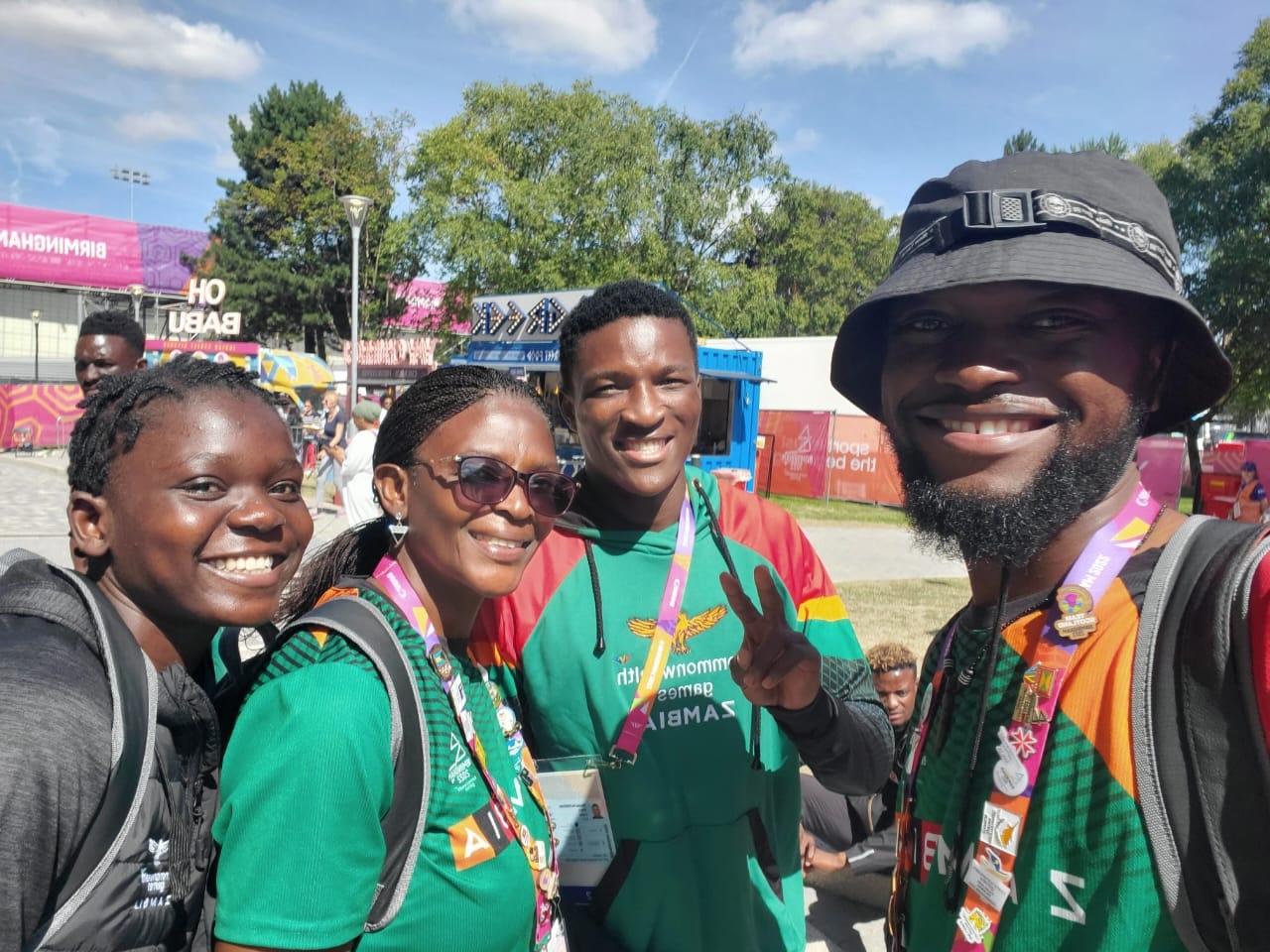
Team Zambia at the Birmingham 2022 Commonwealth Games Village
2026 is another exciting games year. After a relatively quiet 2025, the global calendar is packed: the Milano Cortina Winter Olympic Games, the expanded FIFA 2026 World Cup, the Glasgow 2026 Commonwealth Games and the Dakar 2026 Youth Olympic Games closing out the year. For fans, these are spectacles. For those of us on the inside (or used to be), they are also years of long days, high stakes and constant coordination.
Somewhere right now, a newly appointed member of a Games Management Team is feeling that pressure. They are "the team behind the team," responsible for making thousands of small, mostly invisible decisions that allow athletes to shine. This case study is written for that person.
I have been privileged to serve in that space, managing my nation's delegation at major multi-sport events. Here, I focus on the Birmingham 2022 Commonwealth Games, where I served as Games Administrator for Team Zambia.
Understanding "Games-time": Years, Not Weeks
Work for a national delegation does not start a few weeks before the Opening Ceremony; it starts years earlier. I think of "Games-time" as a multi-year arc:
Early Phase
Strategy, qualification pathways, budgeting frameworks and initial stakeholder engagement.
Intensification Phase
Detailed logistics, confirmation of sports and athlete pools, training and camp planning (roughly two years to six months out).
Event Phase
Local camp, pre-Games staging, arrivals, accreditation, village operations, competition support and departures.
By the time Birmingham 2022 began, we were not starting; we were landing a multi-year project in a highly compressed, high-visibility window.
The context made this even more demanding. Birmingham 2022 arrived as the world was emerging from the COVID-19 pandemic. There was pressure on the Organising Committee and on every participating nation to deliver a safe but genuinely celebratory return to full stadiums. Protocols were strict, athlete welfare was paramount and there was little margin for error.
My Role at the Centre of the System
I sat at an intersection of several key actors:
In practical terms, that meant turning high-level decisions and constraints into workable operational plans and feeding information back from the ground so leaders could make informed choices. It also meant being constantly "on call" for coaches, athletes and staff across different time zones and locations.
If you are stepping into a similar role, expect your calendar to be full and your inbox to be overflowing. Expect meetings about meetings. The key is to see yourself as a connector and translator, not just an administrator. Your value lies in how clearly and calmly you move information between people who speak different "languages" (technical sport, government, operations, media).
Making Games-Time Work: What Actually Happened
Building the Preparation Pathway
Our Games-time arc included:
Day Local Residential Camp
To centralize athletes and staff, standardize information and begin team-building.
Day Pre-Games Camp at Durham University
Where 55 members of the delegation lived, trained and acclimatized before entering the Games environment.
Staggered Arrivals
From multiple countries, driven by different competition schedules and personal training bases.
My responsibilities here focused on:
- Ensuring that camp lists, rooming allocations and training schedules were aligned and communicated.
- Tracking movements from home bases to local camp, from local camp to pre-Games camp, and onwards to Birmingham.
- Identifying pinch points early—for example, tight connections or late-night arrivals that would affect recovery.
Key Learning for Practitioners
Create a single source of truth early (shared tracker or database) with people, dates, flights, accommodation and contact details. Guard its accuracy fiercely. Everything else—from accreditation to transport—depends on it.
From Pre-Games Camp to Village Life
Together with the Chef de Mission, I moved ahead of the full delegation from the pre-Games camp to Birmingham to attend the Delegate Registration Meeting. This is where final decisions on sport entries, accreditation categories and village allocations are validated.
This phase was about three things:
- Confirming that every athlete and athlete support personnel had the right accreditation and access.
- Negotiating practical adjustments (rooming, proximity to venues, special needs) where possible.
- Learning the operational rhythm of the Games so we could brief our own coaches and athletes effectively.
Once the team arrived, we shifted into full village operations across three separate Games Villages (Warwick, Birmingham and NEC). We ran offices in multiple villages, coordinated with CGA assistants, aligned with medical and safeguarding staff, and managed daily information flow. Our job was to ensure that from an athlete's perspective, everything "just worked": meals, transport, call-room times, media engagements, recovery sessions.
Key Learning for Practitioners
Your calm is contagious. When you understand the system and communicate it simply, you reduce anxiety and mistakes. Build daily routines—briefings, written updates, clear escalation channels—to make complexity feel manageable.
The Human Side: Difficult Decisions and Personal Growth
It would be dishonest to pretend everything went smoothly. Games-time invariably includes moments that test your judgment and your ego.
One such moment came around a doubles event for a particular sport. The athletes wanted to compete. I personally wanted them to compete. But, after reviewing the situation, the Games Management Team concluded that the best course of action was to withdraw them from that entry. The reasons cannot be shared in a public document, but they involved a combination of performance, welfare and broader team considerations.
As Games Administrator, I had to support and implement that decision, even though it went against my personal preferences and against what some stakeholders expected. It required:
- Communicating the decision clearly to the athletes and their coach.
- Managing the emotional impact while maintaining relationships.
- Keeping the broader team focused on their own events.
These are not the moments you post on social media, but they are where you grow. Operational roles go beyond logistics—they are also about values. You learn to prioritise the long-term interests of the team over short-term popularity, to separate your identity from individual decisions, and to hold firm when you know the bigger picture demands it.
"You will sometimes have to make or support unpopular decisions. Anchor yourself in clear principles—athlete welfare, fairness, integrity, long-term performance—and communicate from that place."
What I Wish I Knew Before My First Games
If you are preparing for Milano Cortina (this is way too late), Glasgow, Dakar or any other major multi-sport event in the coming years, here are some distilled takeaways from my Birmingham journey:
Define your Games-time window. Think in years or months, not weeks. Map what must happen in 'early,' 'intensification' and 'event' phases.
Own the information. Become the person who knows where the master list is and keeps it accurate.
Invest in relationships before crises. Build trust with coaches, athletes, medical staff and officials early.
Create simple, repeatable routines. Daily briefings, written updates and clear escalation paths are the backbone of operational excellence.
Remember the why. Your ultimate job is to create the conditions for athletes to perform and for your country to be proud.
Results: When Operations Meet Performance
Birmingham 2022 ultimately became one of Team Zambia's most successful outings at the Commonwealth Games—a powerful reminder that meticulous, and often invisible, operational work really does translate into performance on the track and in the ring.
Gold Medal
Muzala Samukonga
Men's 400m
Silver Medal
Stephen Zimba
Welterweight Boxing
Bronze Medal
Patrick Chinyemba
Flyweight Boxing
For me, standing behind the scenes as Games Administrator, those medals were proof that when a management team plans early, works collaboratively and keeps athletes at the centre of every decision, a nation's best sporting stories can be written on the biggest stages.
Final Thoughts
Stepping into a Games Management Team role can feel overwhelming. The pressure is real, the hours are long and the margin for error is small. But it is also one of the most rewarding environments to learn leadership, systems thinking and empathy.
If you embrace the complexity, stay curious, and keep athletes at the centre of your decisions, you will not just survive Games-time—you will grow through it, and you will help your team write a story worth telling.
Behind the Scenes
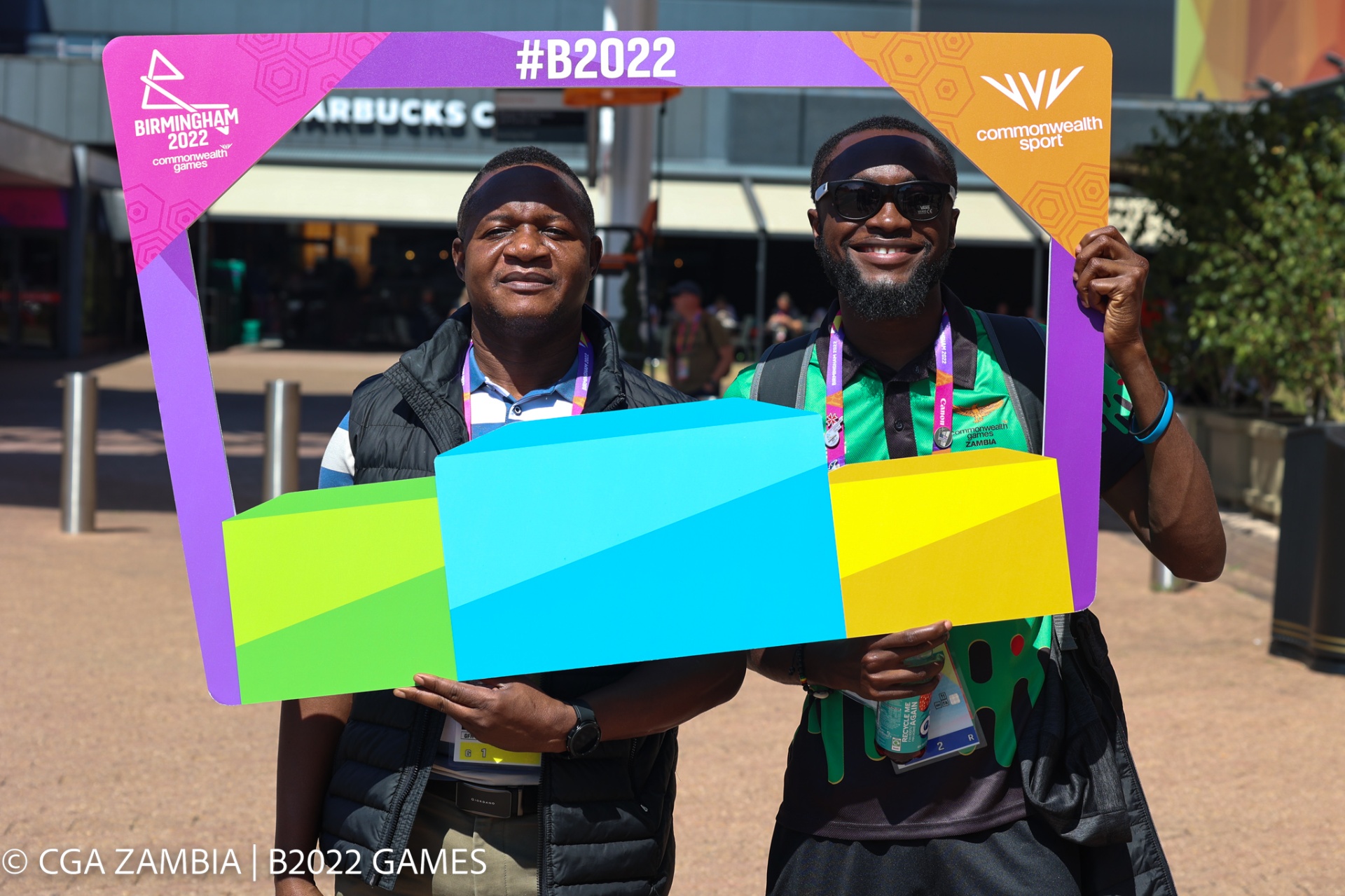
Team moment at the Birmingham 2022 photo booth
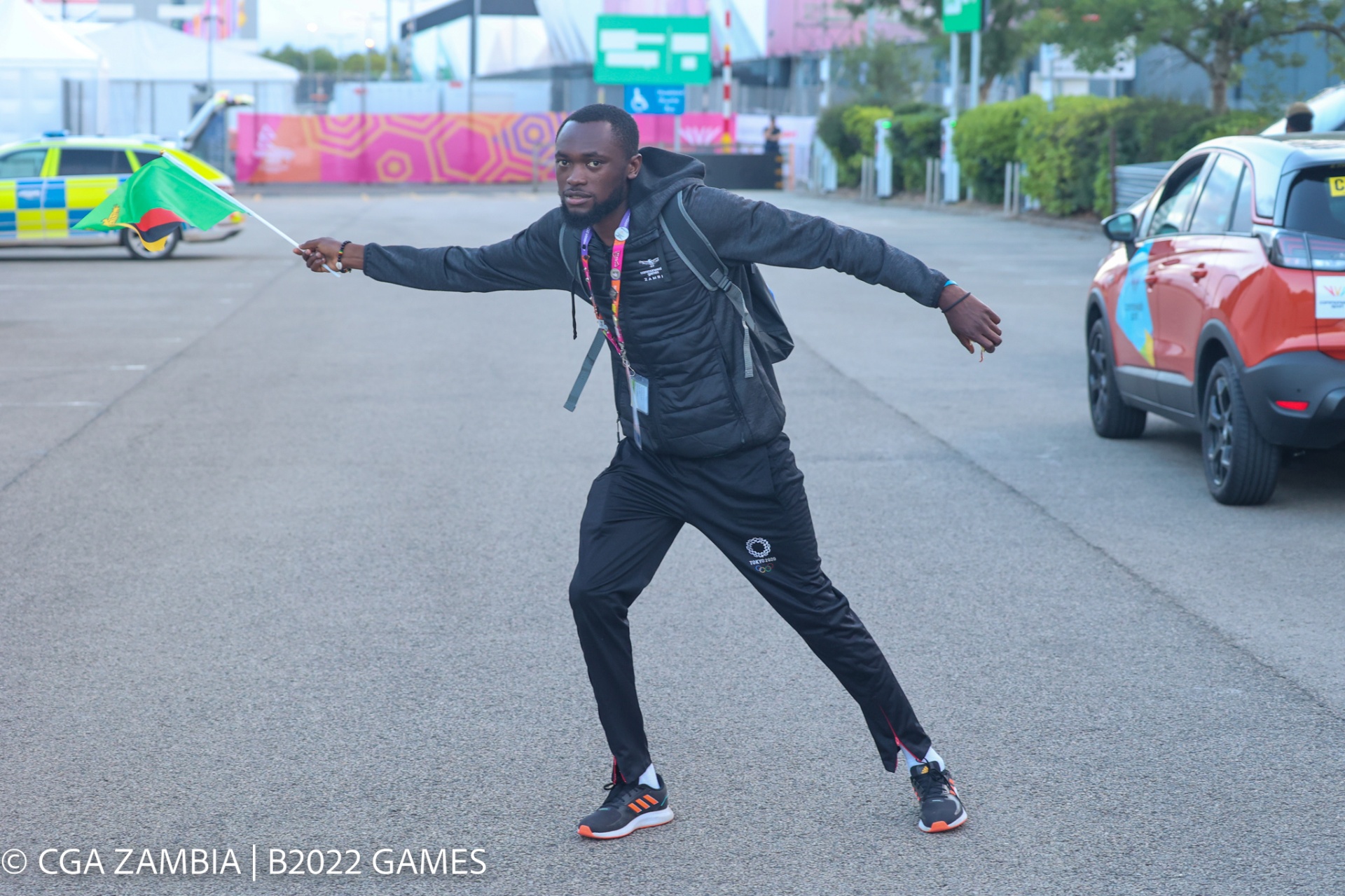
Flying the Zambian flag at the Games Village
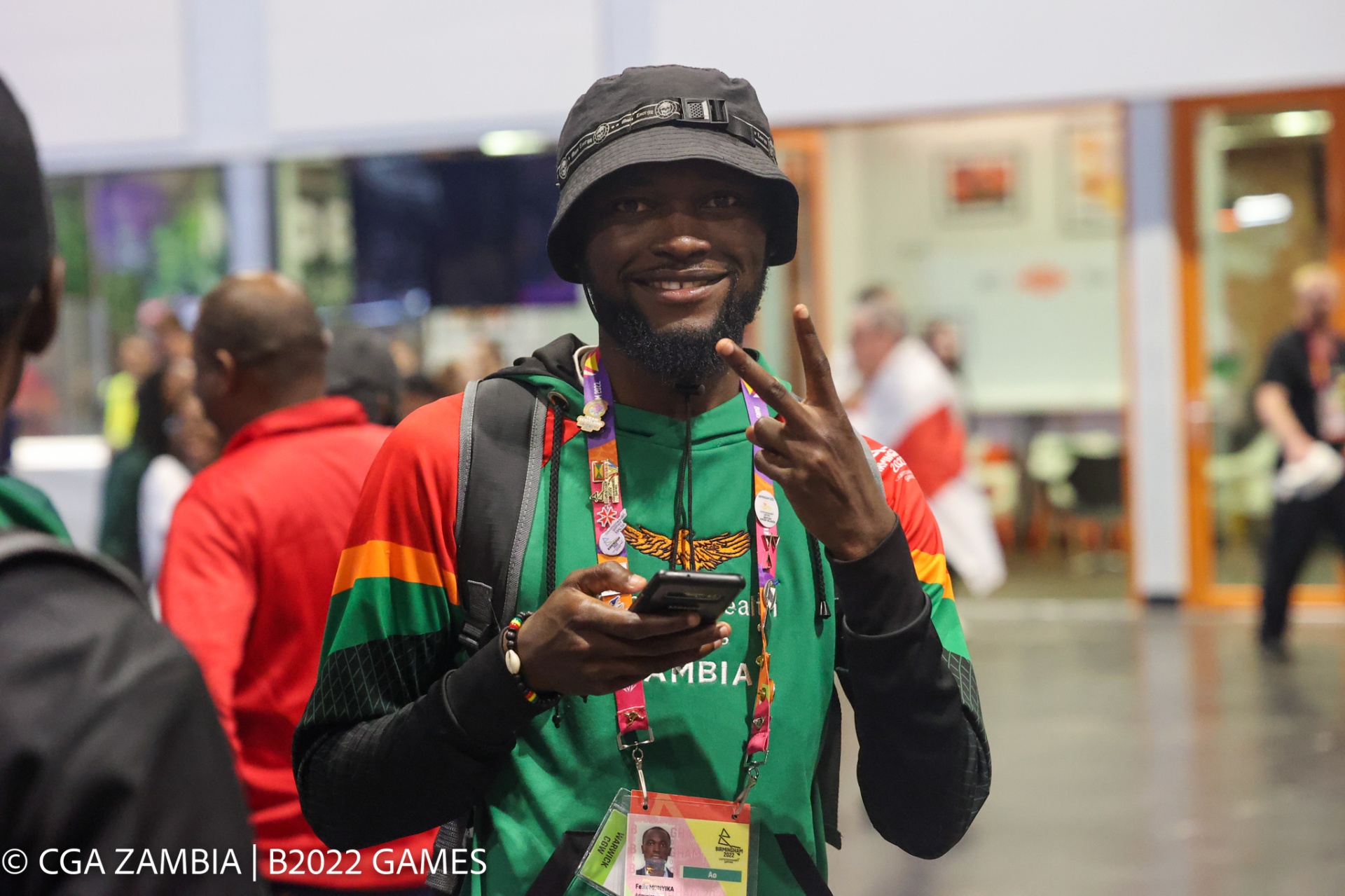
In the Athletes' Village during competition days
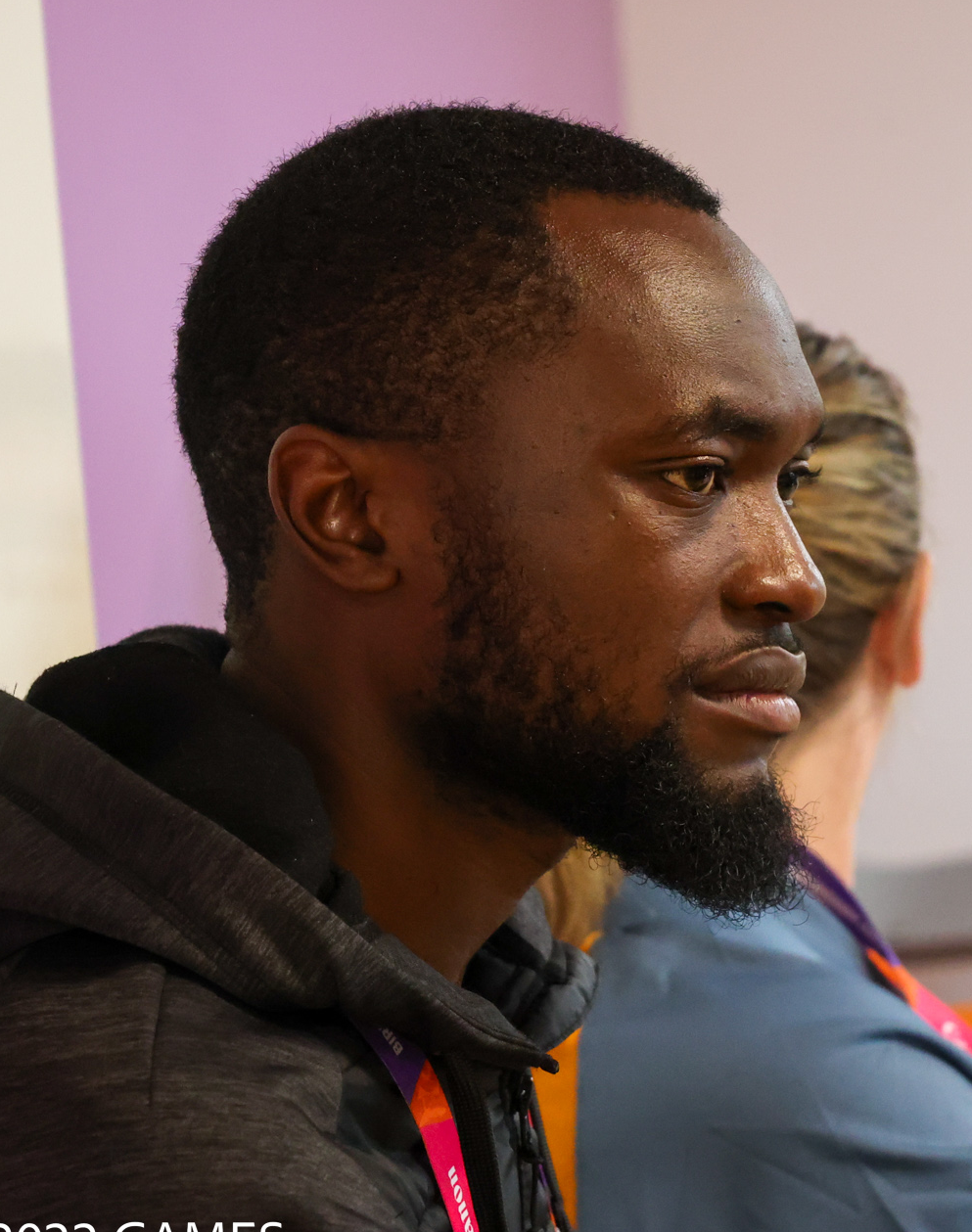
Behind the scenes at media operations
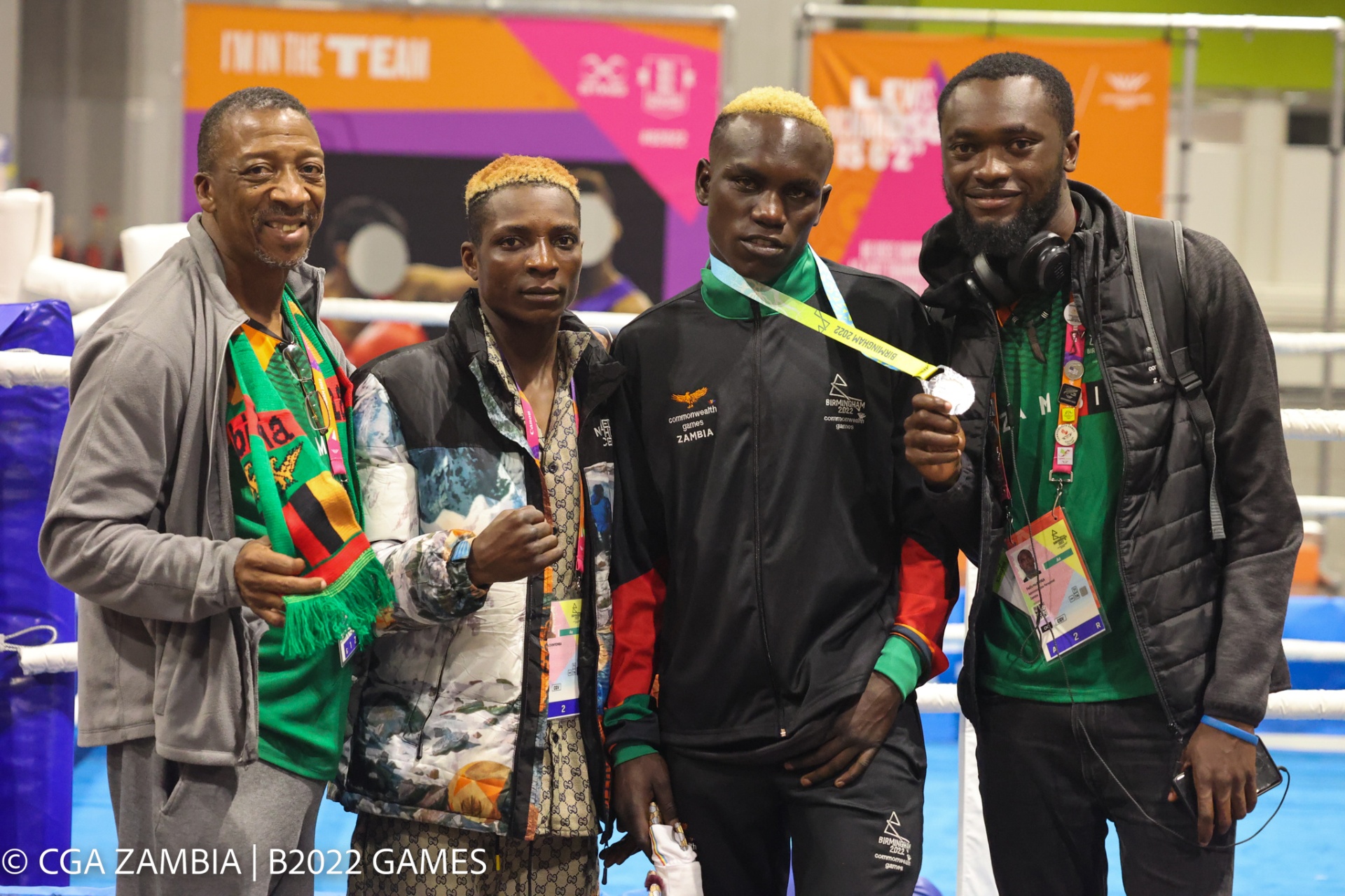
Celebrating with the boxing team after Stephen Zimba's silver medal
Acknowledgments
I would like to extend my sincere gratitude to the Commonwealth Games Association of Zambia (CGA Zambia)—which also serves as the National Olympic Committee of Zambia—led by President Alfred Foloko and Secretary General Boniface Kambikambi, for the opportunity to serve in this capacity. Their vision and support made this experience possible.
I also want to acknowledge Chef de Mission Victor Banda and General Team Manager Doris Mulenga, with whom I worked closely throughout this period. Their guidance, collaboration and dedication to Team Zambia's success were instrumental to our collective achievements.